Sound modules
The same audio library supplied as a module for other products in the range.
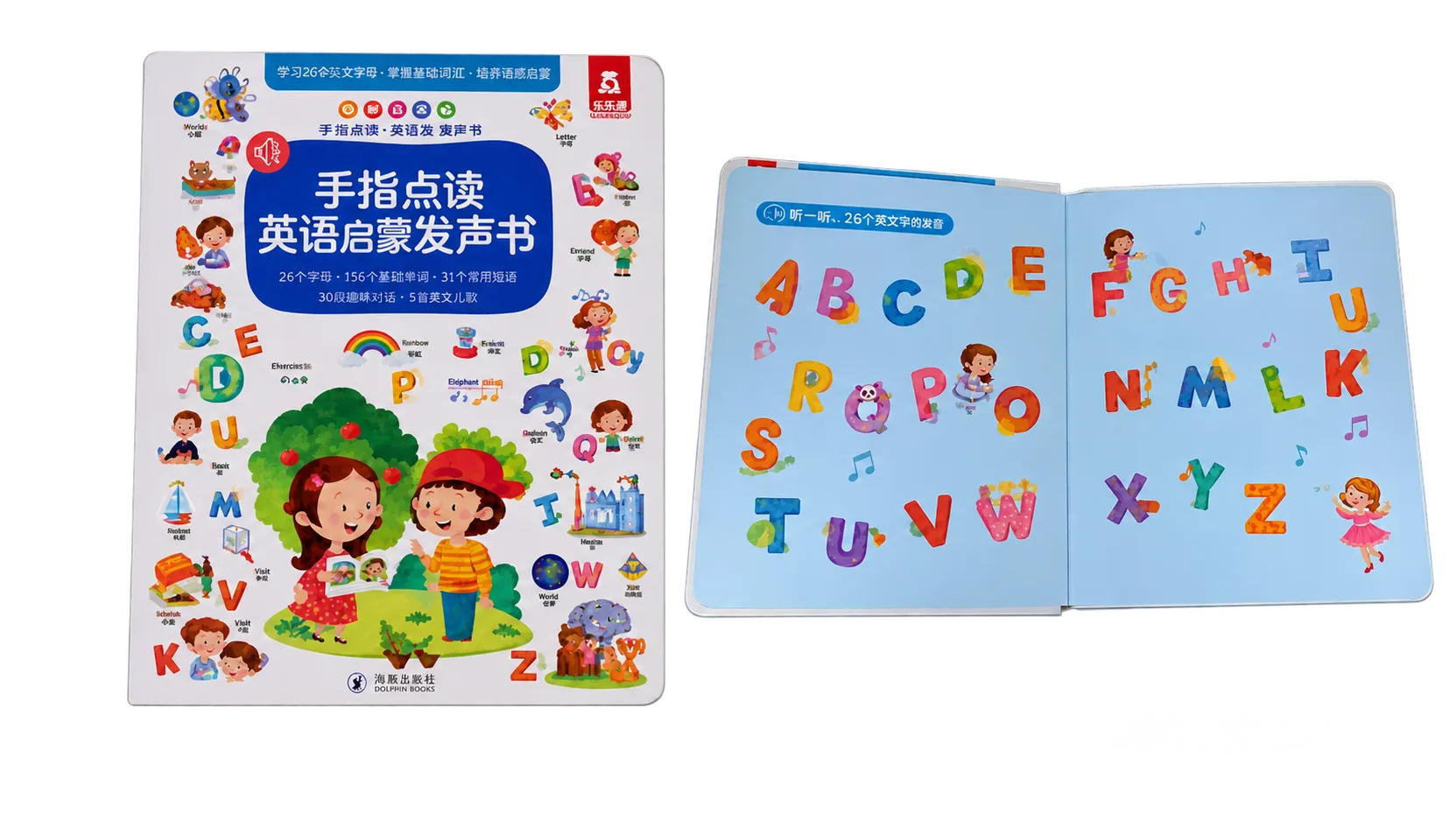
SOUND BOOKS · PRINT + AUDIO
A sound book is a print product and an electronic product at the same time. We produce both — pages, panel, audio and binding — so the printed cue and the sound it triggers are designed together.

The format decides most of the constraints. Choosing it early is worth more than optimising any single detail later.
| Format | How it works | Best for |
|---|---|---|
| Inner-button books | The trigger sits inside the page or cover rather than on a side panel | Titles where the printed image and the sound belong in the same place |
| Side-panel books | A button panel along the side or bottom of the book | Song books and titles with a small, fixed set of repeated actions |
| Module-only supply | The audio panel is supplied for integration by the publisher or printer | Existing titles and reprints where print is handled elsewhere |
The single most useful document in a sound book project is the map: page, printed cue, trigger, audio file, expected behaviour. It is written before the artwork is finalised and before the recordings are made, because changes to any one of those four items affect the others.
For a translated edition the map is rewritten rather than reused. Word length, page order and cultural references change per language, and a map that works in one language frequently produces a mismatched experience in another.
Artwork and audio both change during development, and either can be revised without the other. That is the most common source of production errors in this category: a reprinted page paired with an old audio revision, or the reverse.
The practical answer is to keep both revisions visible on the sample and on the approval document. A sample that does not state its configuration cannot be approved meaningfully.
Board books are built to survive handling by very young children, which changes the engineering. Pages are thick, the binding is rigid, and the sound panel has to sit inside that structure without making the book too heavy to hold.
Agree a physical mock-up before print files are released. A change to board thickness after printing means the whole run is reprinted, so the sample stage is where this gets settled.
Sound books are usually produced in more than one language, and the second language is where timelines slip. The translation has to be complete before recording, and the recording has to be complete before the audio revision is frozen.
Reference library
Sound books and learning print products from the company library.




Adjacent products
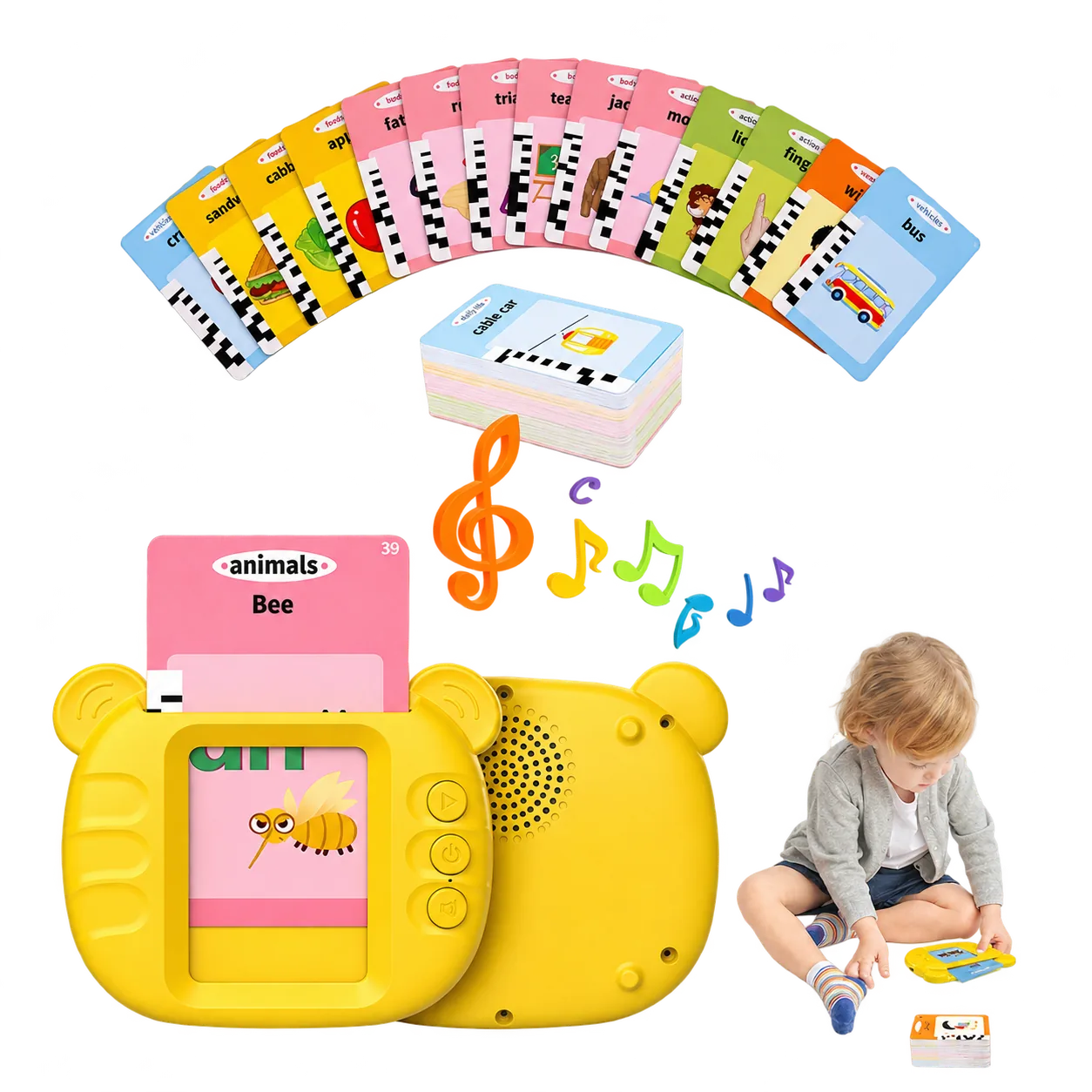
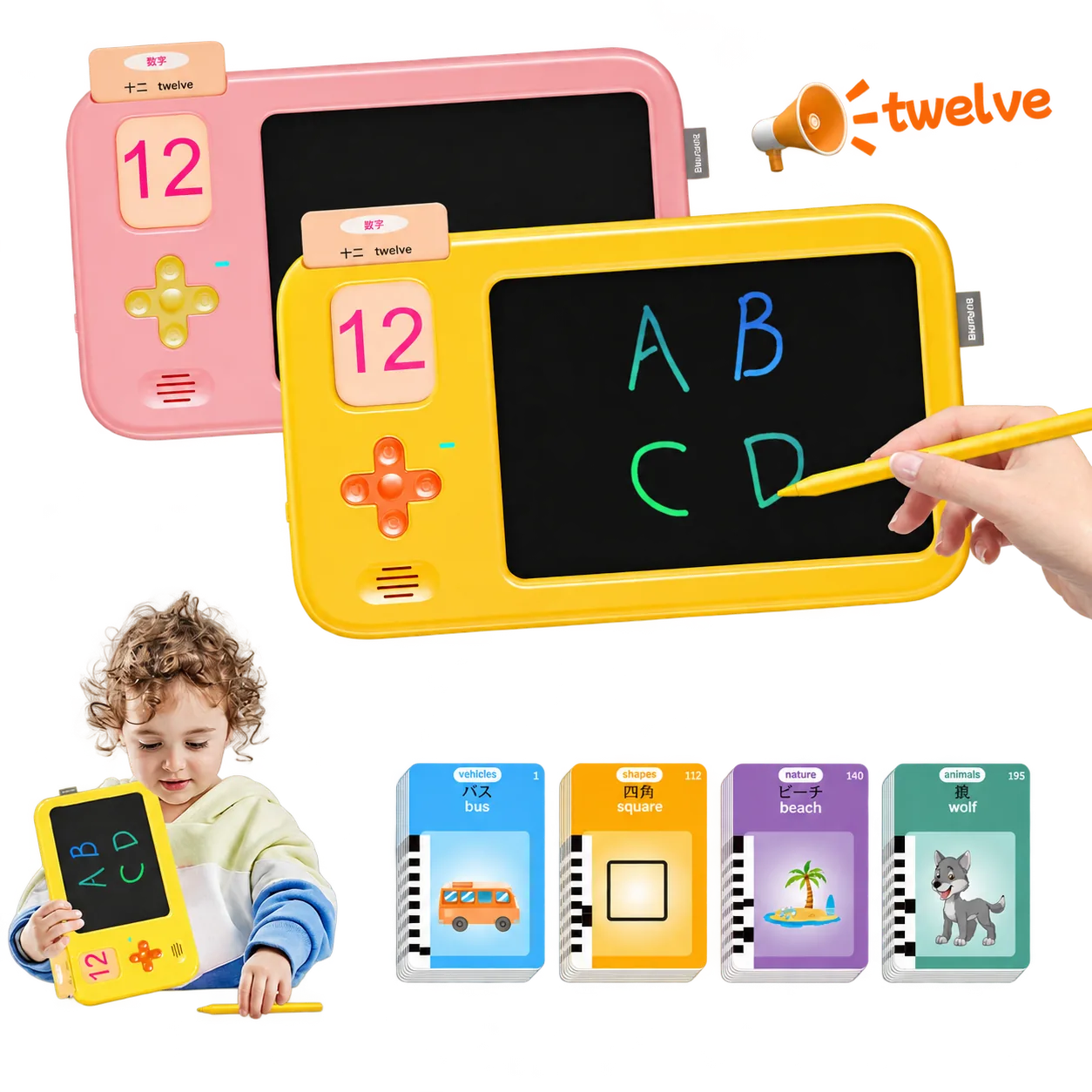
Brands often extend a sound book programme into these formats using the same content.
The same audio library supplied as a module for other products in the range.
Expandable content sets that extend the product after launch without new tooling.
The same title produced in several languages, with the audio re-recorded rather than re-cut.
Sound book FAQ
Yes. The module-and-panel format exists precisely for that case: the panel is supplied to your printer with an interface drawing, and the book is produced on your side.
It depends on the format and the page count, not a fixed number. A short book with one clip per spread is a different product from a book with a panel of twenty buttons.
We can produce recordings against an approved script, or work with audio the brand supplies. In both cases the language and voice direction are agreed before recording starts.
The decision between sealed and replaceable is made at design stage. Replaceable adds accessibility requirements; sealed simplifies the assessment but shortens usable life.
Send a short brief and we will reply with the questions that actually affect cost, tooling and timing.
Start a project